Last updated October 15, 2026




Free written scope consultation - allowances, timeline, and change-order rules on paper before a single trade is scheduled
How to Hire a Construction Contractor in Tampa: A Step-by-Step Guide
The Florida Department of Business and Professional Regulation logged more than 2,400 contractor complaints in a recent 12-month period. Most of those complaints did not begin with a contractor who lacked a license or a contractor who disappeared mid-project. They began with a contract that named a price but never named a material, a brand, or a cleanup standard. A vague bid is not a paperwork problem. It is an invitation for the final bill to look nothing like the first one. This guide, written from inside Tampa’s remodeling market and part of our more guides & resources, walks you through the conversation you need to have before you sign anything. We will show you how to read a bid the way a contractor reads a blueprint: line by line, asking what each item actually means.
Quick Answer
To hire a construction contractor in Tampa, verify the Florida contractor license on the DBPR website first, then require a written bid that names specific material brands and models, a line-item permit fee, a daily site protection plan, and a written workmanship warranty of at least one year. For a deeper look at the full process, see The Complete Guide to Construction in Tampa. Compare at least three bids by converting each line item to the same specification so you are comparing the same shower valve, the same cabinet line, and the same tile underlayment. Do not sign a contract that names a total price but leaves the materials, the cleanup, or the warranty to be determined later.
Styles & brands we work with


Table of Contents
- Verify the Florida Contractor License Before You Shake Hands
- The Three License Types Tampa Homeowners Confuse
- The Questions to Ask Before You Ever See a Bid
- How to Read a Tampa Bid Line by Line
- How to Compare Bids That Do Not Name the Same Materials
- Site Protection: The Questions That Separate a Careful Crew From a Careless One
- The 365-Day Workmanship Promise: Getting It in Writing
- Tampa-Specific Red Flags: Storm Chasers, Unlicensed Subs, and Missing Permit Fees
Verify the Florida Contractor License Before You Shake Hands
Checking a Florida contractor license takes under two minutes, and it is the single highest-ROI action you will take in the entire hiring process. The Department of Business and Professional Regulation maintains a searchable database at myfloridalicense.com. Type in the contractor’s name or license number, and the system shows you whether the license is active, when it expires, whether it has any disciplinary actions attached, and whether the qualifying agent listed actually matches the person standing in your living room. You want to see “Active” status, not “Active with Conditions” or “Delinquent.” You also want to see the correct license classification for the work being proposed. A contractor who holds a pool license should not be quoting your kitchen remodel.
In Tampa specifically, we have seen homeowners skip this step because the contractor came recommended by a neighbor or because the bid was signed at the kitchen table during a moment of enthusiasm. That is understandable. But recommendations and enthusiasm do not protect you from an unlicensed subcontractor doing electrical work behind your drywall. The DBPR check is free, it takes about the same time as brewing coffee, and it tells you whether the state of Florida has already flagged this contractor for something you would want to know about. Do it before you ask for a bid, not after you have already paid a deposit. Our guide to hiring a General Contractor in Tampa walks through the same verification process in more detail.
One more point on licensing: Florida does not license “handymen” for any regulated trade. Anyone who tells you a license is not needed because the job is small, or because they are working “under” someone else’s license, is describing an arrangement that will not protect you if the work fails inspection. Ask for the license number, write it down, and check it yourself. A legitimate contractor will not hesitate to give it to you.
The Three License Types Tampa Homeowners Confuse
Florida issues three general contractor license designations that sound similar but authorize different scopes of work. Understanding the difference prevents you from hiring the wrong licensee for the wrong job. Here is what each one means:
- Certified General Contractor (CGC): This license allows the holder to build, repair, and remodel almost any type of commercial or residential structure. A CGC can work anywhere in Florida, not just in the county where the license was issued. For large whole-home projects, additions, or structural work, you want a CGC.
- Certified Building Contractor (CBC): This holder builds and remodels residential and commercial buildings up to three stories. The difference from a CGC is primarily about the size and scope of commercial projects. For most Tampa home remodels, a CBC is a perfectly appropriate license.
- Certified Residential Contractor (CRC): This license covers residential work only: single-family homes, duplexes, quadplexes, and townhomes. A CRC can remodel, repair, and build residential structures but cannot do commercial work. For bathroom and kitchen remodels in Tampa’s established neighborhoods like Seminole Heights, Palma Ceia, and Westchase, a CRC is the right license.
The practical takeaway: do not get stuck on the letters. Instead, match the license type to the project type. A whole-home remodel that moves structural walls calls for a CGC or CBC. A kitchen remodel that stays within the existing footprint is well within a CRC’s scope. When you check the DBPR database, confirm the classification matches the work being quoted. If a contractor holds a CRC and is bidding a three-story commercial build, that is a mismatch worth asking about. For residential work, though, the CRC license is exactly what it sounds like: the residential specialist.
License classification is also a useful filter when you are weighing bids. A contractor carrying a CGC has passed additional testing and experience requirements, which does not automatically make them better at residential remodeling, but it does tell you they have a broader base of verified experience. For most families hiring a contractor in Tampa, the more important verification is that the license is active, clean, and correctly scoped – not which of the three classifications they chose to pursue.
The Questions to Ask Before You Ever See a Bid
Most homeowners interview a contractor and ask about timeline and total cost. Those questions matter, but they skip the questions that actually determine whether the project goes smoothly. Before you ask for a bid, ask these questions. Write down the answers. Compare them across contractors the same way you compare prices.
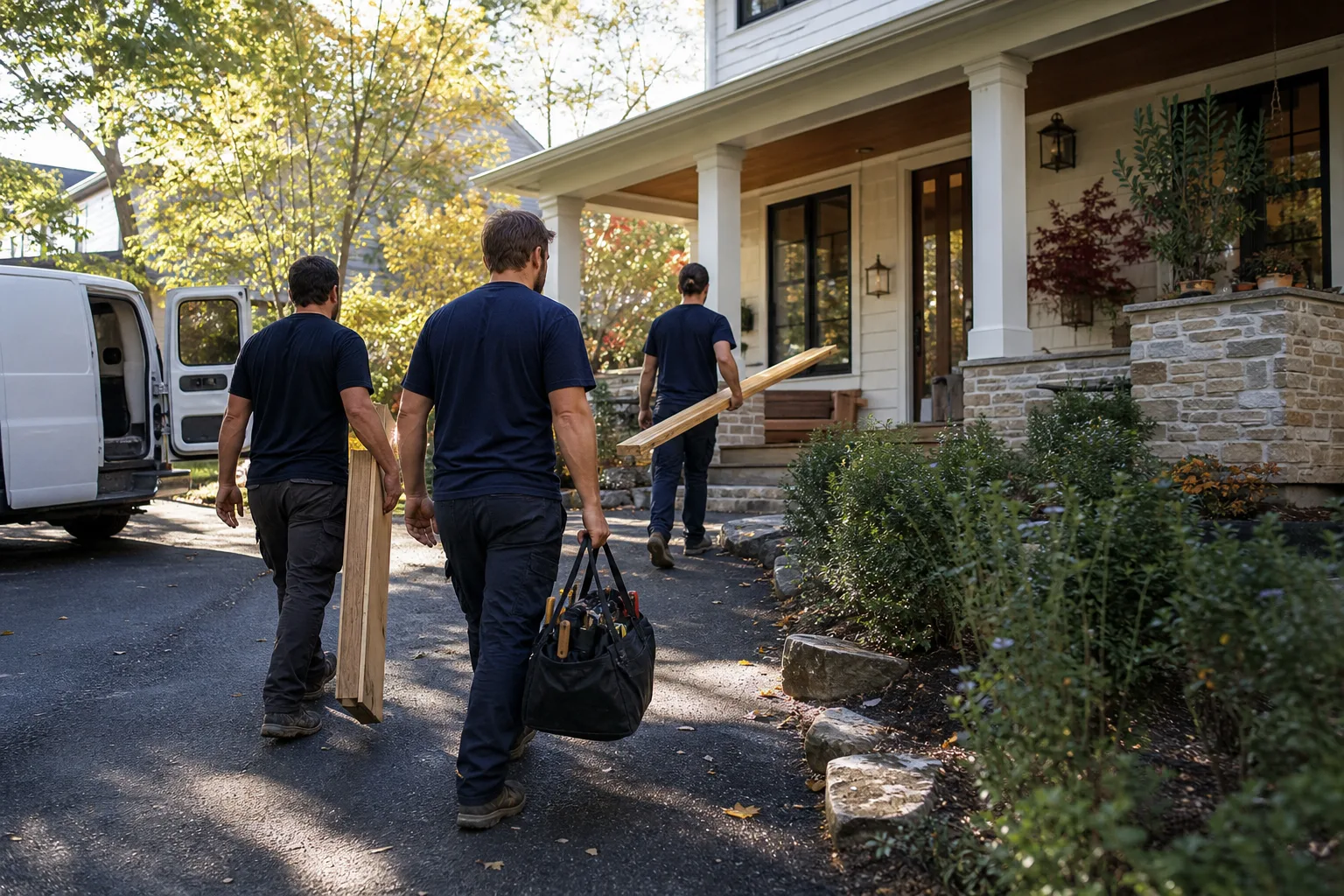
- “Who will be in my house, and how do I know they are safe?” You are not hiring a contractor. You are hiring everyone that contractor sends through your front door. Ask whether technicians are background-checked, whether they wear uniforms, and whether you will be introduced to the crew before work begins. In our business, every technician is background-checked and uniformed, so families in Tampa know exactly who is walking through the door on day one.
- “What will you place under your saw, and what will you cover when you walk through the living room?” A contractor who answers with specifics – drop cloths, shoe covers, floor protection film – is describing a protection plan. A contractor who answers with “we’re careful” is describing a hope. The answer tells you how they will treat the house when you are not watching.
- “What are your quiet hours, and how do you handle families with napping children?” If the contractor looks confused by this question, that is useful information. A crew running a tile saw during a toddler’s nap time turns a two-week remodel into a two-week hostage situation. Ask for the specific hours when loud tools run, and ask whether the crew observes a pause during typical nap windows.
- “Will the price you give me today be the price on the final invoice?” The answer you want is yes, provided the scope does not change. The answer you want to avoid is a hedge about “unforeseen conditions.” On a remodeling project, unforeseen conditions do happen: a rotted subfloor behind a shower wall, a pipe in the wrong place. The question is how those conditions get priced. You want a contractor who writes down the price for the work before it starts and who brings any change to you in writing before doing it.
- “What brands will you use, and can I read the warranty on the products before we sign?” A remodel is a product purchase disguised as a service purchase. The cabinets, countertops, and fixtures have manufacturer warranties that matter for years after the crew leaves. If the contractor will not name the brands, you cannot research the warranties. At Elmstead Remodeling Tampa, we name our material partners in writing – KraftMaid and Wellborn cabinets, Cambria and Silestone countertops, Kohler and Moen fixtures – so homeowners can look up the warranty before they commit.
- “How do you handle pets in the house during the project?” A good contractor will ask you this before you ask them. A dog who is stressed by strangers and power tools is a safety variable for everyone. Ask whether the crew is comfortable with a pet in the house, how they will secure doors and gates, and whether they will choose pet-safe product options where there is a choice.
How to Read a Tampa Bid Line by Line
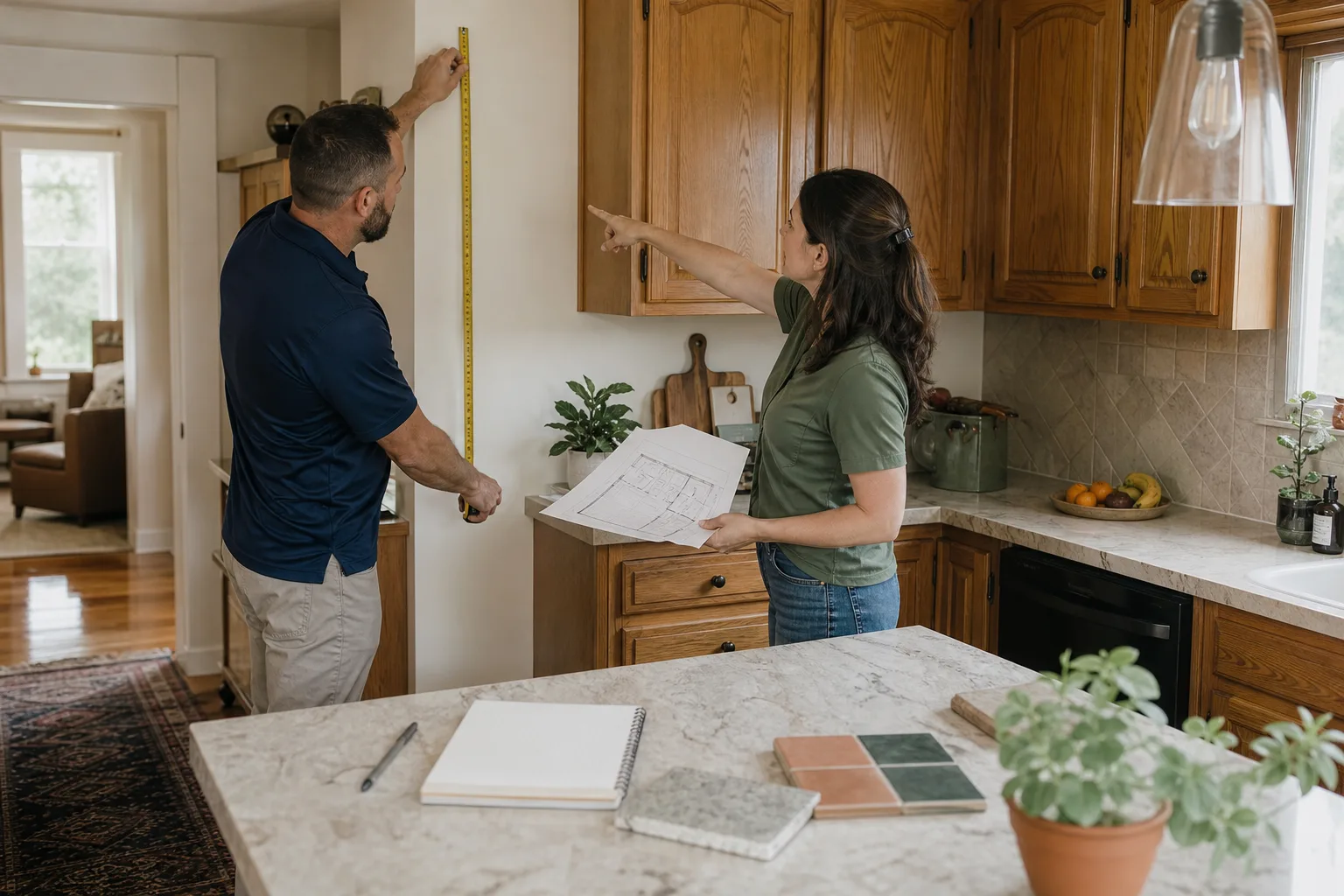
A bid is not a summary of work. It is a contract for what will and will not happen inside your home. Reading it line by line is the difference between hiring a contractor and gambling on one. Here is the method we recommend to our Tampa clients:
- Look for the permit line first. If the bid does not list permit fees as a line item, ask why. A licensed contractor pulling a permit on a residential remodel in Tampa is doing the job correctly. A bid that omits the permit fee either means it will be added later (the bill grows) or it means the permit will not be pulled at all (the work is unprotected). Neither is acceptable. The permit fee should be its own line item, not buried in “miscellaneous.”
- Read every material line and ask: what exactly am I buying? “New kitchen cabinets” is not a line item. It is a placeholder. You want to see “KraftMaid maple cabinets, shaker style, in alabaster finish, with soft-close doors.” That level of detail lets you compare bids, verify pricing, and check the manufacturer’s warranty before the boxes arrive.
- Check the demolition and disposal line. Some bids bury the cost of removing old materials, hauling debris, and disposing of it properly. In Tampa, debris disposal means dumpster rental, landfill fees, and sometimes lead paint considerations in pre-1978 homes. If the bid says “demolition included” but does not show a dumpster fee, ask where the debris goes.
- Look for the word “allowance.” An allowance is a placeholder that caps how much the contractor will spend on a finish item. A $2,000 lighting allowance means you get to spend up to $2,000 on fixtures. But if the allowance is too small, it is a way to keep the bid low and grow the bill later. Ask whether the allowance reflects what you actually want. Better yet, ask to replace allowances with specific product selections before signing.
- Find the “not included” section. A good bid states what is excluded. Painting, flooring transitions, shower glass installation, trim work – these are common exclusions that homeowners discover on day 10. Read the exclusions before you read the total.
- Look for a cleanup line. If the bid does not say who cleans, when, and to what standard, assume the dust on the windowsill is yours. We include a photo of the clean-up before the crew leaves on every job. Ask your contractor what their cleanup proof looks like.
How to Compare Bids That Do Not Name the Same Materials
Three bids for the same kitchen remodel will rarely name the same materials. One contractor quotes KraftMaid cabinets, another quotes an in-house cabinet shop, a third quotes “semi-custom cabinets” with no brand at all. Comparing those bids side by side feels impossible, but there is a method. You convert each line item to the same specification.
Start with the highest-ticket line items: cabinets, countertops, fixtures, tile, and waterproofing. For each one, ask the contractor the same question: “What exact product is this line item for?” Then write it down in a simple table like this:
| Line Item | Contractor A | Contractor B | Contractor C |
|---|---|---|---|
| Cabinets | KraftMaid maple, shaker | “Semi-custom” – no brand named | In-house build, plywood boxes |
| Countertops | Cambria quartz, 3cm | Granite, unspecified origin | Silestone quartz, 2cm |
| Fixtures | Moen Align faucet | “Builder-grade” | Kohler Purist |
| Shower waterproofing | Schluter system | Not specified | PVC liner only |
Look at the table and the comparison stops being about price. It becomes about specification. Contractor B’s bid may be $4,000 lower, but “semi-custom” with no brand named and “builder-grade” fixtures means you are agreeing to risk that the products will be whatever is cheapest that week. Contractor A and Contractor C named products you can research, warranty-check, and price-check independently. Both are legitimate approaches, but they are different products. You are not comparing $42,000 to $38,000. You are comparing known brands to unknown brands. That changes the math.
For the countertop line, apply the same method. Cambria and Silestone are both quartz products with manufacturer warranties that travel with the slab. “Granite, unspecified origin” is not an equivalent. It may be a fine stone, or it may be an import with no brand accountability. Asking the question converts a vague line item into a comparison you can actually make.
Repeat this for every line item above $500. Under $500, let small differences exist. Above $500, convert to equivalent specs before you decide. This method alone will save you from signing the bid that looks cheapest on page one and most expensive by final invoice. Our Kitchen Remodeling in Tampa page shows examples of the specification level we put in writing.
Site Protection: The Questions That Separate a Careful Crew From a Careless One
A contractor’s bid tells you what they will build. Their site protection plan tells you what they will leave behind. These are two different promises, and you want both in writing. In a lived-in home with children and pets, site protection is not a courtesy. It is a safety requirement.
Here are the questions to ask, and the answers that indicate a careful, professional crew in Tampa:
- “What will you put on my floors, and when will you put it down?” You want to hear about drop cloths, rosin paper, or floor protection film. You want to know that protection goes down before the first tool comes out, not after the first scratch happens.
- “How do you contain dust between the work area and the rest of the house?” Drywall sanding and tile cutting create dust that travels much farther than you expect. A good contractor uses plastic sheeting and zipper doors to create a dust barrier. In Tampa’s older homes, where rooms flow into each other without long hallways, this matters even more.
- “Do you wear shoe covers inside the house?” This is a small thing that signals a large habit. If the crew wears shoe covers at the door and removes them when stepping outside, the house is not paying the price for every trip to the truck. We include shoe covers and drop cloths on every visit, every time, as part of the Cedarwell Care Promise. It is not an add-on you have to request.
- “What hours will the loud tools run?” A concrete answer here tells you the crew has thought about the family, not just the schedule. At Elmstead Remodeling, we use quiet tools during family rest hours where possible. If a contractor has no answer, assume the tile saw runs whenever the crew wants it to run.
- “What proof do I get that the site was cleaned up?” Ask for the evidence. A photo of the cleaned work area before the crew leaves is a simple, verifiable standard. We include a photo of the clean-up before the crew leaves on every job, every day. If a contractor balks at this request, ask yourself what the photo would show.
- “How do you handle a child or pet who walks into the work area?” The best answer is a plan: barriers, signage, communication with the family, and zero tolerance for an unguarded work zone. A crew that has never thought about this question has never protected a family during a remodel.
The 365-Day Workmanship Promise: Getting It in Writing
A verbal assurance that “we stand behind our work” is worth about as much as a verbal assurance that “the check is in the mail.” A workmanship warranty only matters when it is written into the contract, with a specific term and a specific process for making a claim. You want to ask for both.
The simplest version: after the project is complete, if something the contractor installed fails due to workmanship, the contractor returns and fixes it at no cost. That is the promise. The terms that matter are how long the promise lasts and what happens when you call. A 365-day workmanship promise is a meaningful line in the sand. It says the contractor is willing to stand behind the work for a full year after the final walkthrough. Twelve months covers the Seasonal Construction Care for Tampa: Year-Round Homeowner’s Guide demands-the humidity of summer, the rain of hurricane season, the cooler snap in January. If a cabinet door warps in August or a tile lippage appears in November, the promise should cover it.
Ask the contractor to show you the warranty language in the contract before you sign. Here is what to look for:
- A specific duration. “One year” or “365 days” or “12 months” – not “lifetime” unless the contract defines what that means.
- A process for claims. Who do you call? How quickly will someone come look? Is there a written response form?
- What is covered. Workmanship defects, yes. Normal wear and tear, no. Manufacturer defects, handled through the manufacturer warranty. The contract should distinguish these.
- Who responds. The same crew that did the work, or a warranty department? Either is fine, but you want a name and a phone number, not a voicemail box.
At Elmstead Remodeling Tampa, every project includes the 365-Day Done Right Promise: if it is not done right after the job is complete, we make it right. That promise is stamped on every project, not whispered at the handshake. Ask any contractor you are considering to put their version of that promise in writing. If they will not, the promise does not exist. For bathroom work specifically, see how we apply the same standard to Bathroom Remodeling in Tampa projects.
Tampa-Specific Red Flags: Storm Chasers, Unlicensed Subs, and Missing Permit Fees
Tampa’s contractor market has three recurring problems that homeowners in other cities do not face in the same way. Each one is visible in the bid or the initial conversation, if you know what to look for.
1. Storm-chaser upsells after hurricanes. After every named storm, Tampa sees an influx of out-of-area contractors knocking on doors with offers to inspect roofs, siding, and windows. Some are legitimate. Some are not. The red flag is not the out-of-area license; it is the unsolicited offer combined with urgency. A contractor who shows up after a storm, declares your roof “one good rain from failing,” and pressures you to sign that week is not selling you a roof. They are selling you fear. In Florida, legitimate storm repair work is governed by specific insurance processes and licensed contractors. Check the DBPR license, ask for the written inspection report, and get a second opinion before signing anything. Real storm damage does not evaporate in the time it takes to get a second bid.
2. Unlicensed subs on permitted jobs. The contractor you hire may hold a valid license, but the electrician or plumber on your job site may not. In Florida, electrical, plumbing, and certain types of roofing work require state-issued specialty licenses. Ask the contractor who will do the electrical work, the plumbing work, and the HVAC work, then ask for the license numbers of those subcontractors. A contractor who hesitates at this question is telling you something important. On a permitted job, unlicensed subs can invalidate the permit, stall the inspection, and leave you holding the repair bill.
3. Bids that omit permit fees as a line item. This deserves repetition because it is so common in Tampa. A contractor bids a whole-home remodel at a price that seems fair. The permit fee is missing from the bid, or listed as “TBD,” or included in a vague “fees” line with no dollar amount. Then the bill comes, and the permit fee is $1,800 you did not plan for. Ask for the permit line as a written, dollar-amount item before you sign. A licensed contractor knows what the permit costs. They just need to write it down.
Common Mistakes to Avoid
- Signing a bid that names a total but not a material. “Kitchen remodel: $52,000” is not a bid. It is a guess. If the cabinets are not named, the countertops are not specified, and the fixtures are not listed, you have not bought anything. You have paid for someone else’s discretion.
- Skipping the DBPR license check because the contractor came recommended. Recommendations carry weight, but they do not verify license status, disciplinary history, or scope. The DBPR check is free and takes two minutes. Do it for every contractor, every time.
- Comparing bids without converting line items to the same spec. A KraftMaid cabinet is not the same product as “semi-custom, brand TBD.” Comparing them by price only tells you which bid is cheaper, not which one is better.
- Accepting an “allowance” for a finish item without checking whether the allowance covers what you actually want. A $1,200 faucet allowance does not buy a $1,800 Kohler wall-mount. Replace allowances with specific product selections before you sign.
- Not asking about site protection until the day the crew shows up. By then, the time to set expectations is over. Ask about drop cloths, shoe covers, dust containment, and quiet hours before you sign the contract.
- Assuming the workmanship warranty exists because someone said the words. “We stand behind our work” is not a warranty. A written, dated, specific workmanship promise is a warranty. Ask to see it in the contract.
- Treating permit fees as an afterthought. In Tampa, permits are a line item, not a surprise. If the bid does not show them, the bill will.
See the difference
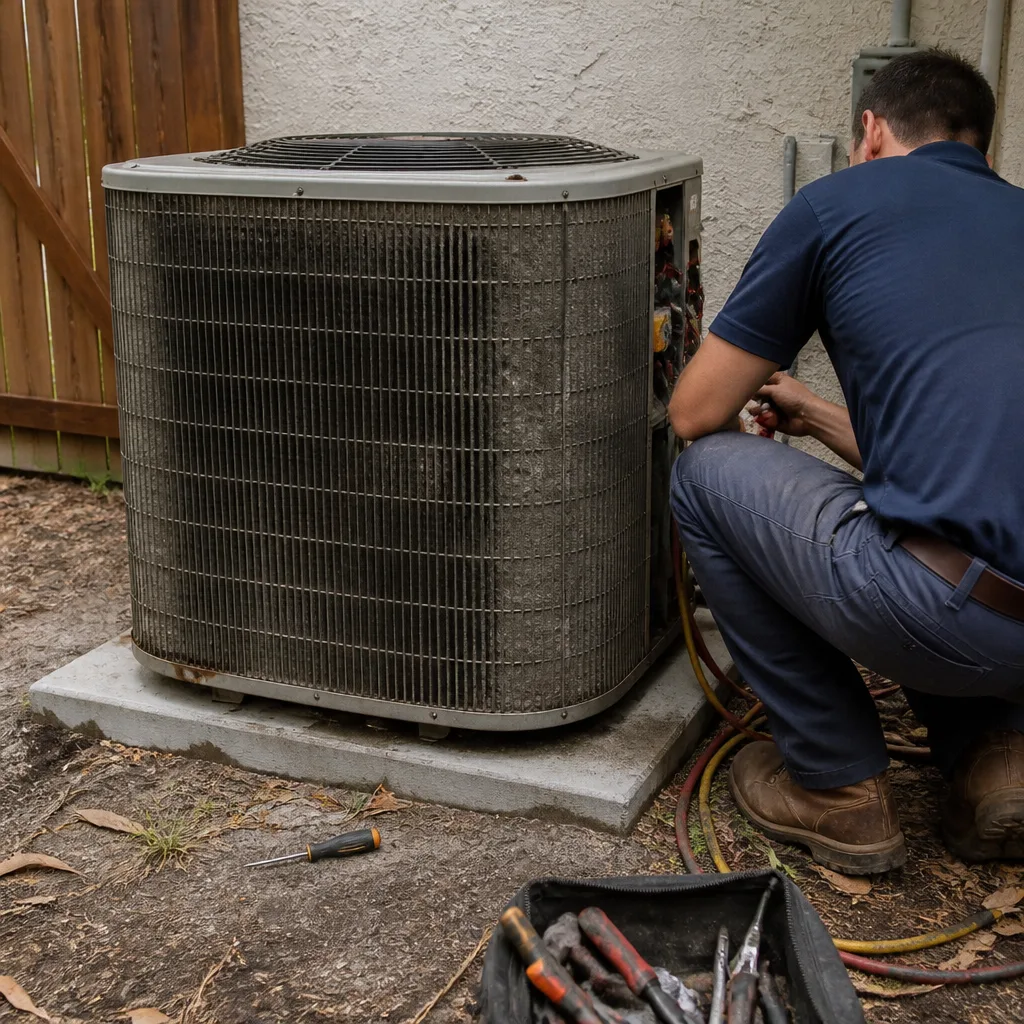 Before
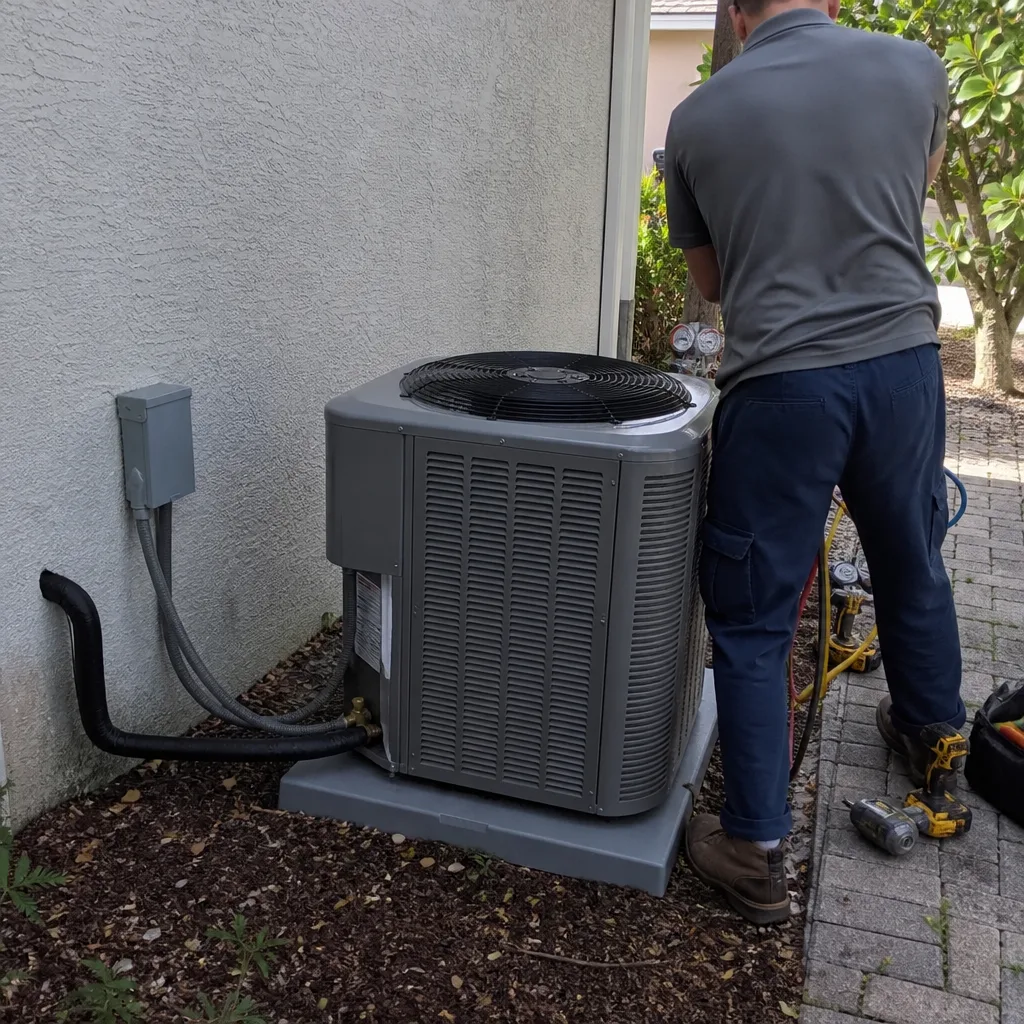 After
After Before
 After
After Before
 After
AfterWhen to Call a Professional
Some projects you can scope out on your own: painting a bedroom, swapping a light fixture, changing a faucet. The step up to a permitted remodel – moving walls, adding square footage, rebuilding a bathroom down to the studs, reworking the electrical or plumbing – is a different category of work. It involves building codes, inspections, waterproofing systems, and material warranties that a professional handles daily. If you are planning a kitchen remodel, a bathroom remodel, or a whole-home remodel in Tampa, you want a licensed contractor who pulls the permit, names the materials in writing, protects the house during the work, and puts the workmanship promise in the contract. Elmstead Remodeling Tampa offers free estimates in Tampa – call (850) 779-4017 to have a specific conversation about your project.
Frequently Asked Questions

Go to myfloridalicense.com, the Florida Department of Business and Professional Regulation’s search portal, and enter the contractor’s name or license number. You are looking for “Active” status, a matching license classification (CBC, CGC, or CRC for residential remodeling), and no significant disciplinary actions. The check takes under two minutes and should be done before you sign anything.
A full kitchen remodel in Tampa typically ranges from $35,000 to $75,000, depending on the cabinet line, countertop material, fixture level, and whether walls or plumbing move. For detailed pricing factors, see our Construction Cost Breakdown: The Tampa Homeowner’s Reference for 2026. A mid-range kitchen with KraftMaid cabinets, Silestone or Cambria countertops, and new plumbing in place often falls in the $45,000 to $60,000 range. Call (850) 779-4017 for an exact quote – estimates are free.
A bathroom remodel in Tampa typically ranges from $18,000 to $40,000, depending on whether the project is a cosmetic refresh or a full down-to-the-studs rebuild with waterproofing, tile, and new plumbing. A full guest bath remodel with a new shower, floor tile, vanity, and fixtures often runs $22,000 to $30,000. Call (850) 779-4017 for an exact quote – estimates are free.
Not if the scope stays the same and the contractor practices upfront pricing. At Elmstead Remodeling Tampa, a written price is given before any work starts, every time, on every project – no estimates that grow after the crew arrives. Changes to scope are brought to you in writing, with a price, before any additional work happens.
Yes. A licensed contractor should pull permits as part of the project, with the permit fee listed as a line item on the written bid before you sign. If a contractor suggests skipping the permit to save money, that is a red flag, not a savings opportunity.
A kitchen remodel in Tampa typically takes 4 to 8 weeks, depending on the size of the project, the cabinet lead time, and whether walls or plumbing move. A bathroom remodel typically takes 2 to 4 weeks. Your contractor should give you a written timeline before the work starts, with scheduled check-ins along the way. Call (850) 779-4017 for a timeline specific to your project.
The Bottom Line
Hiring a construction contractor in Tampa comes down to whether the conversation before the contract produces a written price, a named material, a site protection plan, and a workmanship promise. Those four items are not luxury add-ons. They are the difference between a remodel that goes the way the bid described and a remodel that goes the way the DBPR complaint files describe. Verify the license, compare the bids line by line, ask about the drop cloths and the quiet hours, and require the 365-day workmanship promise in writing before you sign. The best contractor conversation is the one where you never have to wonder what something means.
Contact Elmstead Remodeling Tampa

If you are planning a kitchen remodel, bathroom remodel, or whole-home remodel in Tampa, we would be glad to walk through your project with you. We will give you a written price before any work starts, name the materials in the bid, protect your floors with drop cloths and shoe covers, and put the 365-Day Done Right Promise in writing. Call (850) 779-4017 to schedule your free estimate.
Written by Graham Stein, Owner at Elmstead Remodeling Tampa, serving Tampa since 2005.