Last updated October 15, 2026








Free written scope consultation - allowances, timeline, and change-order rules on paper before a single trade is scheduled
General Contractor Maintenance Checklist for Tampa Homeowners
A standard home loses its exterior caulk seal in as little as 18 months in Tampa’s UV index. The same bead of caulk lasts three years or more in Atlanta. Yet most contractor-issued maintenance checklists still recommend re-caulking every three years, which means a Tampa homeowner who follows generic advice is walking around with failed seals for half the life of their exterior. This guide is different. It sequences maintenance around Tampa’s actual weather calendar: the May pre-rainy-season window, the September-October post-storm inspection, the year-round fight against humidity and salt air. You’ll learn which tasks a homeowner can handle, which ones Florida law says require a licensed contractor, and the specific products that hold up in our climate.
Quick Answer
A Tampa home maintenance checklist should follow the city’s actual climate calendar, not a generic four-season model. Pre-rainy-season prep happens in April and May, post-storm inspection in September and October, and humidity control runs year-round. Tasks involving structural, electrical, plumbing, or roof work in Florida legally require a licensed contractor; cosmetic and routine upkeep you can do yourself.
Styles & brands we work with




Table of Contents
- Why Tampa’s Climate Demands a Different Maintenance Calendar
- The Month-by-Month Tampa Maintenance Calendar
- What Florida Law Says: Licensed Contractor vs. DIY Tasks
- Products That Actually Hold Up in Tampa Humidity and UV
- How a Written Post-Project Maintenance List Protects Your Warranty
- Three Signs a Maintenance Issue Has Crossed Into Permitted Repair Territory
- Maintaining a Home After a Tampa Remodel
Why Tampa’s Climate Demands a Different Maintenance Calendar
Tampa sits in USDA hardiness zone 9b and a humid subtropical climate. We get roughly 50 inches of rain a year, most of it between June and September. The average relative humidity hovers around 75 percent. The UV index hits 11 or higher for a third of the year. Salt air from Tampa Bay and the Gulf reaches inland further than most people think, especially in South Tampa, Westchase, and anywhere west of Dale Mabry. That combination of moisture, heat, sun, and salt breaks down building materials faster than almost anywhere in the continental U.S.
What does that mean for a maintenance checklist? It means the calendar is reversed from the rest of the country. In Minnesota, spring is for cleaning gutters after snow. In Tampa, spring is the last dry window before the daily downpours begin. Miss that window and gutter work waits until October. It means exterior paint on west-facing walls fades and chalks in two to three years instead of five to seven. It means HVAC systems in Tampa run 3,000-plus hours a year and the condensate drain line clogs with algae in months, not seasons.
We’ve walked through hundreds of Tampa homes over the years. The pattern is always the same: the homeowner who follows a northern maintenance calendar has a roof leak by August, a mold bloom in the garage by September, and an HVAC failure during the first heat wave of May. The homeowner on a Tampa calendar catches the cracked roof boot in April, replaces it in a single afternoon, and never thinks about it again. This guide is built for that second homeowner.
For a deeper look at how local contractors approach whole-home care, see our General Contractor in Tampa guide.
The Month-by-Month Tampa Maintenance Calendar
The goal here is simple: do the right task in the right month so you are never scrambling after a storm or a heat wave. Each month lists the essential tasks, with notes on which ones legally require a licensed contractor in Florida. This calendar is written for a single-family home in Hillsborough County, but the rhythm works for Pinellas and Pasco too.
January: Dry Season Inspection
January is Tampa’s driest, coolest month. It is also the best month to inspect the outside of your home because the weather is comfortable and the afternoon rains are months away. Walk the perimeter of the house and look at every seam: where the stucco meets the window frames, where the fascia meets the roofline, where the driveway meets the foundation. In Tampa, these caulk joints fail from UV exposure long before they fail from age. If you can slide a fingernail into the gap between caulk and substrate, the seal is gone.
- Inspect and re-caulk exterior seams: window perimeters, door frames, and wall penetrations. Use a mold-inhibiting exterior caulk rated for high UV, such as OSI Quad Max or DAP Dynaflex Ultra. Standard acrylic caulk will chalk and crack within a year.
- Check the roof for loose or lifted shingles. A loose shingle in January becomes a blown-off ridge cap during June thunderstorms.
- Test every exterior GFCI outlet with a GFCI tester. Tampa’s high humidity corrodes outlet terminals faster than dry climates.
- Flush the water heater. Hillsborough County water is moderately hard, and sediment builds up in the tank. A five-minute flush extends the tank’s life by years.
February: Irrigation and Drainage Before the Dry Season Ends
February marks the transition out of Tampa’s dry season. Rain is still scarce, but the days are lengthening and the heat is coming. This is the month to make sure your drainage is ready for the deluge still months away, because the dry ground lets you see problems that will be hidden by summer grass and standing water.
- Run every irrigation zone and watch for broken spray heads, misaligned rotors, and puddling. A broken head in February becomes a sinkhole conversation in August.
- Clean out drainage swales and French drains. Remove leaves, pine needles, and any debris that has accumulated since October.
- Walk the yard during a full irrigation cycle. Low spots that hold water now will hold even more water in June. Regrade anything holding water for more than 24 hours, or call a contractor to do it.
- Inspect the drip edge and scuppers on flat roof sections. Tampa homes with mid-century flat-roof additions are common in Seminole Heights and Palma Ceia, and a blocked scupper means water pooling on a roof membrane that bakes all summer.
March: HVAC Deep Clean Before the Heat
March is your last comfortable month before the air conditioner starts running daily. In Tampa, the HVAC system is the most stressed mechanical system in the house. Condensate drain lines clog with algae and slime. Coils cake with dust and mold. Air filters load up with oak pollen, which starts dropping in late February and peaks in March.
- Replace or clean the air filter. During March through October in Tampa, a 1-inch filter should be replaced monthly, not every 90 days. Oak, pine, and grass pollen plus mold spore counts justify the shorter interval.
- Pour a cup of white vinegar or a commercial condensate line cleaner into the condensate drain line. In Tampa humidity, this line is the most common cause of water damage from an HVAC system when it clogs.
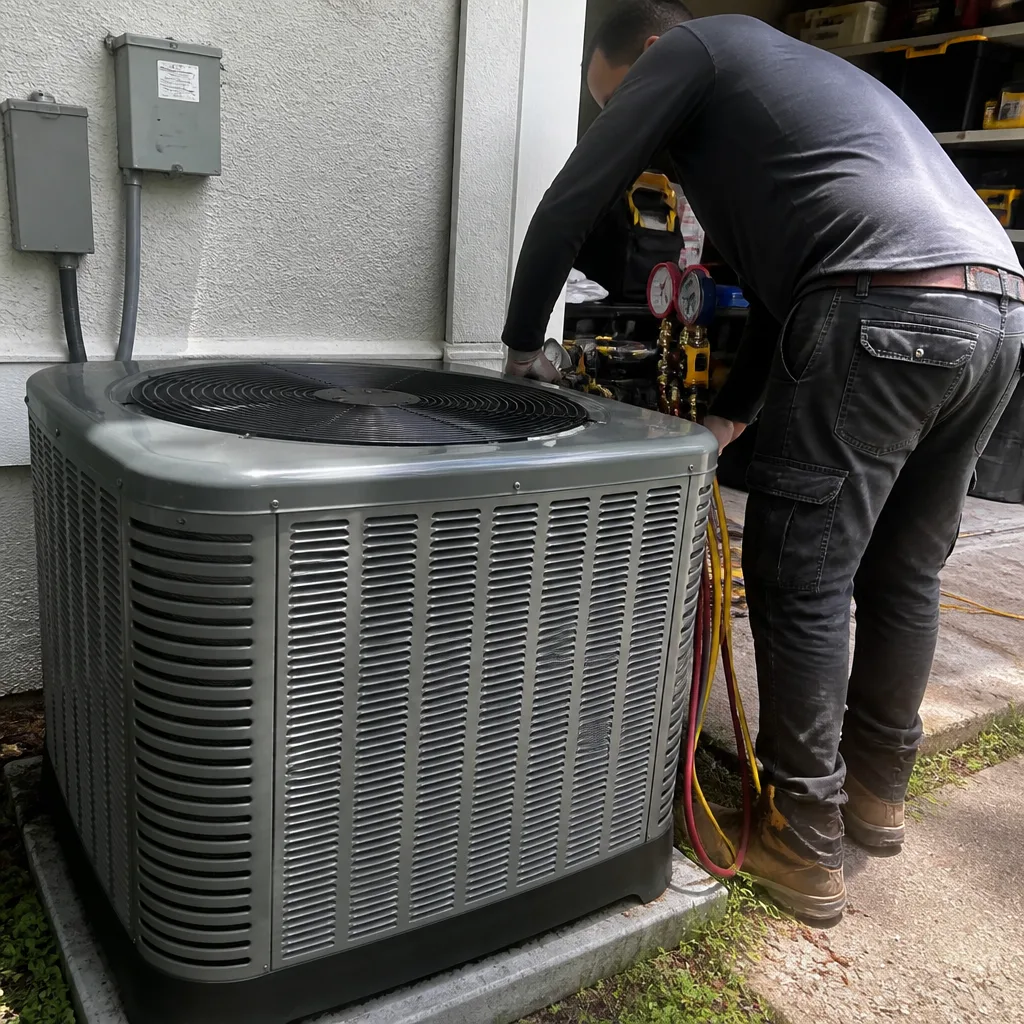
- Schedule an HVAC inspection and coil cleaning. A professional cleaning before summer improves efficiency and catches refrigerant leaks while the system is under low load.
- Trim back any vegetation growing within 2 feet of the condenser unit. Tampa’s growing season is so long that plants you trimmed in November are already touching the unit again.
April: Final Dry Window Before Rainy Season
April is the last month with predictably dry weather until October. Once the rainy season starts in late May or early June, any exterior task becomes a race against the afternoon thunderstorm. This month is your deadline for exterior sealing, roof repair, gutter work, and painting. If you miss April, you are waiting until fall for anything that needs dry conditions to cure.
- Seal any exterior wood trim, fascia, and window sills with a high-solids exterior paint or sealer rated for UV. West and south-facing surfaces in Tampa get hammered and need attention every two years.
- Clean gutters and downspouts completely, then run water through them to confirm they flow. A gutter that drains slowly in April overflows in a July downpour.
- Re-secure any loose roof tiles, ridge caps, or flashing. If your home has a tile roof, April is the time to have a licensed roofer walk it. When you need a roof you can trust during hurricane season, you can visit our Elmstead Remodeling Tampa home to learn more about how we handle exterior work and whole-home care.
- Inspect window and door weatherstripping. Replace anything cracked or compressed. With rain blowing sideways in summer storms, a failed weatherstrip means water on the windowsill.
May: Pre-Rainy-Season Final Checklist
May is the run-up to the daily thunderstorms. In a typical Tampa year, the first heavy rain arrives by late May. Every task this month is about keeping water out and air flowing. This is also the month when termite swarms appear, drawn to moisture and warm evenings.
- Do a final walk-around looking for the three things that cause 80 percent of storm-season water intrusion in Tampa: failed caulk, clogged gutters, and missing roof fasteners.
- Check the attic for daylight coming through the roof deck. Any pinhole of light is an active leak path. In Tampa, even a pinhole grows fast once the daily rain starts.
- Walk the home at dusk once this month and look for termite swarmers near lighting. Tampa’s drywood and subterranean termite pressure is active year-round but peaks in May and June. If you see wings on a windowsill, call a licensed pest control company before you call a contractor.
- Test the sump pump if you have one. Homes in low-lying areas of South Tampa, Riverview, and parts of South Hillsborough often have sump pumps. Pour a bucket of water into the pit and confirm it cycles and discharges.
June through September: Monitor, Do Not Repair
Rainy season in Tampa is not the time for exterior repairs. Afternoon thunderstorms arrive like clockwork, often dumping an inch of rain in an hour. Anything you open up to repair is likely to get rained on before you finish. The job for these months is monitoring, cleaning, and interior work only.
- Walk the interior of the house after every heavy rain. Check ceilings, around windows, and in corners for water stains. A stain that appears in June and is ignored becomes a mold problem by August.
- Run the bathroom exhaust fans for 20 minutes after every shower. This is the single most effective thing you can do to prevent mold growth in Tampa bathrooms, and it costs nothing.
- Keep the AC set at 78 degrees or lower during humid weeks. Letting the house warm to 82 while you are away for a weekend allows humidity to climb past 70 percent, and that is mold territory.
- Empty the dehumidifier daily if you run one. In Tampa garages and laundry rooms, a dehumidifier set to 50 percent relative humidity prevents that musty smell that seems impossible to eliminate.
- Keep gutters clear of leaves after every storm. June is when oak leaves and pine needles drop in quantity, and a single thunderstorm will pack a gutter full of both.
- Do not pressure wash the exterior during these months unless you have a covered area. You will force water behind siding and stucco that will not dry for months.
October: Post-Storm Inspection
October is the first month of Tampa’s second dry window, which runs from mid-October through November. Now you can finally fix everything you noticed during rainy season. This is also the month to thoroughly inspect the roof, because hurricane season peaks in September and any damage needs to be addressed before the next front comes through.
- Have a licensed roofer inspect the roof, especially if any named storm passed within 50 miles of Tampa. The inspection should cover shingle adhesion, flashing around vents and chimneys, and roof boot condition.
- Walk the exterior looking for water stains, stucco cracks, and paint peeling that appeared during the summer. Water stains on stucco indicate trapped moisture behind the surface.
- Clean the exterior of the HVAC condenser of leaves, twigs, and storm debris.
- Flush the irrigation system and check all zones again after the summer’s growth. Roots from fast-growing Tampa plants often invade irrigation lines during the wet season.
- Inspect all exterior door thresholds and sweeps. Warped wood from summer humidity plus storm-driven rain means doors that no longer seal.
November: Trim, Prune, and Prep for Dry Season
November is the second dry window. Trees are soaking up the last of the warm weather, and hurricanes are done for all practical purposes. This is the month to do any exterior painting, stucco repair, and wood trim replacement you deferred from summer.
- Trim all tree limbs that overhang the roof or touch the house. In Tampa’s fast growth climate, a limb that was 3 feet from the roofline in March is touching the shingles by November.
- Repaint or reseal any exterior wood that shows cracking, chalking, or bare wood. Use products rated for Florida UV; standard exterior paints from national brands often fail on south-facing Tampa walls within 24 months.
- Reseal the driveway and any paver surfaces. Tampa pavers fade from both UV and rain splatter, and sealing in the dry season gives the sealer time to cure before the next wet cycle.
- Check all outdoor light fixtures for corrosion. Salt-laden air, even 5 miles inland, corrodes fixture housings and wiring connections. Replace corroded fixtures before they become electrical hazards.
December: Interior Work and Plumbing Check
December is a quiet month in Tampa for contractors, which makes it a good month for interior work that does not require opening exterior walls. It is also the month to check plumbing fixtures, because the temperature differential between the warm supply lines and the cooler ground can reveal small leaks.
- Check under every sink for drips, corrosion, or slow leaks. A slow leak under a Tampa bathroom vanity grows mold behind the cabinet within weeks, especially in humid weather.
- Inspect all tile grout and caulk in showers and around tubs. Cracked grout and failed caulk are the leading cause of water damage behind shower walls in Tampa.
- Test every shutoff valve in the house by turning it off and on once. Valves that have not moved in years seize up, and a seized shutoff valve during a plumbing emergency means a much bigger repair.
- Run the garbage disposal with a handful of ice cubes and lemon peels to clean the grinding chamber and freshen it.
- Check the attic for signs of rodents or insects. Tampa’s mild winters mean pests stay active year-round. Droppings, chewed wires, or nesting material in December need professional attention.
What Florida Law Says: Licensed Contractor vs. DIY Tasks
Florida draws a hard legal line between what a homeowner can do themselves and what requires a licensed contractor. The Florida Statutes, specifically Chapter 489, require a state-licensed contractor for any work involving structural modification, roofing, plumbing beyond fixture replacement, electrical work beyond fixture replacement, or HVAC work beyond filter replacement. A homeowner can legally perform work on their own residence in many cases, but the work still must meet code, and insurance claims for unpermitted or improperly performed work are routinely denied.
Here is the breakdown of common Tampa maintenance tasks by legal category:
Tasks a Homeowner Can Self-Perform Without a License
- Caulking exterior seams and interior joints
- Cleaning gutters and downspouts
- Replacing air filters and flushing condensate drain lines
- Painting interior and exterior surfaces
- Replacing light bulbs, light fixtures, and switches (with the power off at the breaker)
- Replacing faucet washers, sink aerators, and toilet flappers
- Pressure washing sidewalks, driveways, and exterior walls
- Pruning trees and trimming vegetation
Tasks That Require a Licensed Contractor in Florida
- Any roof repair, replacement, or structural modification
- Replacement of a water heater, water main, or sewer line
- Electrical panel work, new circuit installation, or any wiring beyond fixture replacement
- HVAC equipment replacement or refrigerant work (refrigerant handling requires EPA certification)
- Structural repairs: foundation work, load-bearing wall modification, beam replacement
- Window and door replacement where the rough opening changes
- Any work that requires a building permit from the City of Tampa or Hillsborough County
- Mold remediation beyond 10 square feet of surface area
The permit question is not optional. Tampa’s Construction Services Division requires permits for any work that changes the structure, plumbing, electrical, or mechanical systems of a home. Work done without a permit, even if performed correctly, can stop a future home sale and void your homeowner’s insurance coverage for that system. When in doubt, call the permitting office or ask a licensed contractor. If you need help with any permitted work, see our General Contractor in Tampa guide for a clear explanation of how the process works in Hillsborough County.
Products That Actually Hold Up in Tampa Humidity and UV
Generic product recommendations fail in Tampa. The paint that works in Denver fails on a St. Petersburg beach house. The caulk that performs in Charlotte crumbles in Hyde Park. Here is what actually holds up, based on what we specify for Tampa homes and what we replace when it does not work.
Caulk and Sealant
Use a mold-inhibiting, UV-stable hybrid polymer caulk for all exterior seams. OSI Quad Max, DAP Dynaflex Ultra, and Sika Sikaflex are all products we trust for Tampa exteriors. They remain flexible through the thermal cycles that crack standard acrylic caulk, and they contain mildewcides that resist Tampa’s constant fungal growth. For interior wet areas, use a silicone-based tub and tile caulk with a mold-inhibitor, such as GE Silicone 2+ Kitchen and Bath. Standard latex caulk in a Tampa shower grows mold within six months.
Roof Sealant and Coatings
For flat roof sections, use a silicone roof coating rated for extreme UV exposure. GAF’s Unisil and other high-solids silicone products reflect heat and resist the breakdown that causes elastomeric coatings to crack and peel. For roof boots and flashings, use a self-leveling sealant designed for metal and rubber, not a general-purpose roof patch.
Paint and Coatings
Use a 100-percent acrylic exterior paint with a high UV rating. Sherwin-Williams Duration and Benjamin Moore Aura Exterior are the products we most often see performing well on Tampa homes three and four years after application. On stucco, use an elastomeric coating if the surface has fine cracks, because it bridges small movement and keeps water out.
Exterior Wood Sealants
Tampa humidity and UV destroy wood faster than any other single factor. Use an oil-based penetrating sealer on wood trim and exterior doors, reapplied every 12 to 18 months on south and west faces. Products with high solids and UV inhibitors, such as Penofin or Messmer’s, outperform film-forming clear coats that peel in Tampa sun.
HVAC Filter Schedule for Tampa
Replace 1-inch HVAC filters every 30 days from March through October. During November through February, every 60 days is sufficient for most homes without pets; with indoor pets, stay on the 30-day schedule year-round. For 4-inch media filters, replace every 4 to 6 months. Tampa’s oak pollen season runs February through April, and mold spore counts are elevated from April through October, both of which load up filters faster than national averages. If you are planning any interior work that generates dust, replace the filter when the work is done and again 30 days later.
How a Written Post-Project Maintenance List Protects Your Warranty
Every remodel in Tampa should end with a written maintenance list from your contractor. If it does not, your workmanship warranty may not be enforceable. Here is why: manufacturers warranties, such as those from Kohler on plumbing fixtures or Moen on faucets, require specific care and maintenance. A homeowner who never receives that list never performs the maintenance. When a fixture fails, the manufacturer asks for maintenance records. No records, no coverage.
The same logic applies to the contractor’s workmanship warranty. Many workmanship warranties, including our 365-Day Done Right Promise, assume the homeowner is doing basic care: wiping down surfaces, cleaning drains, keeping the home at normal humidity levels. If a Silestone or Caesarstone countertop develops a stain because the homeowner never sealed it and the contractor never provided sealing instructions, the warranty is void.
Before your contractor closes out the job, ask these questions:
- Can I get a written maintenance list in the closeout packet, not just verbal instructions?
- Which manufacturer warranties apply to the products in this project, and where can I register them?
- What maintenance tasks must I do to keep the workmanship warranty in force?
- What is the exact process for filing a warranty claim if something fails?
- Who do I call for the first year after the project if I notice something that does not look right?
A contractor who cannot or will not provide a written maintenance list is telling you something about how they handle problems after the check clears. At Elmstead Remodeling, every project closeout includes a written maintenance schedule tied to the specific products installed and the specific conditions of the home. If a family gets a Moen faucet in a bathroom remodel, they get the Moen care guide, not a generic one. That specificity is what keeps a warranty enforceable. For more on what a Tampa remodel includes, see our Bathroom Remodeling in Tampa guide.
Three Signs a Maintenance Issue Has Crossed Into Permitted Repair Territory
Not every problem is a maintenance problem. Here are the three signs that a “small fix” has crossed the line into work that legally requires a licensed contractor and probably a permit in Tampa:
1. The problem involves the structure itself
A hairline crack in the stucco is a maintenance item. A crack you can fit a quarter into, especially around door or window openings, is a structural concern. If a door that used to close easily now sticks or rubs, the door frame has moved, and the frame is attached to the structure. If you see a crack in a load-bearing wall or a sag in a ceiling, stop using the space and call a licensed contractor for an inspection. In Tampa’s sandy soils, settlement is common, and some of it is normal. But when a crack widens or a floor slopes more than 1 inch over 20 feet, the foundation is moving in a way that needs engineering review before any repair happens.
2. The problem involves water intrusion you cannot trace
A wet spot on the ceiling under a known plumbing fixture is a maintenance issue: call a plumber, fix the leak, patch the drywall. But water staining that appears after a storm, with no obvious plumbing source, is a roof or flashing issue. Once water has been getting in repeatedly, the decking and framing may be compromised. Repairing that framing is structural work. If you have water stains that keep returning after a roof repair, the repair did not address the flashings, and a licensed roofer needs to open up the area and trace the water. In Tampa, roof leaks that get ignored through one rainy season often become structural repairs by the next one.
3. The problem involves any system that requires a code inspection
If the repair touches plumbing supply lines, the electrical panel, the HVAC system’s refrigerant lines, or any gas line, it is a permitted repair. A homeowner can replace a toilet flapper. Replacing the toilet’s shutoff valve? In Florida, that is fixture-adjacent plumbing, and while many homeowners do it, a leak from that repair that damages the home will not be covered by insurance if the work was not permitted. The safest approach: if the repair would be done inside a wall, under a slab, or requires disconnecting a supply line or a wire, call a licensed contractor. If you are planning any work that needs a permit, our Kitchen Remodeling in Tampa guide explains how the permitting process works from start to finish.
Maintaining a Home After a Tampa Remodel
A remodel changes your maintenance calendar. New materials have different care requirements than the ones they replaced, and the first year after a remodel is when most warranty claims happen. Here is how to fold a remodel into your Tampa maintenance routine.
First, request a written maintenance schedule from your contractor at closeout, as described above. Second, register every manufacturer warranty within 30 days of project completion. Kohler and Moen both require registration for extended warranty coverage, and the clock starts the day the product is installed, not when you get around to registering.
Third, adjust your HVAC filter schedule for the additional dust the remodel generated. Every remodel kicks construction dust into the ductwork, and even with daily cleaning, the residual dust shortens filter life for months. Replace filters monthly for the first three months after the project, then return to the seasonal schedule.
Fourth, pay extra attention to new caulk and sealant joints for the first year. New caulk can fail early if it was applied over moisture or if the surfaces were not properly prepped. Walk the house monthly for the first year and look at every new seam: shower corners, window perimeters, backsplash edges. If you see cracking, pulling away, or discoloration, that is a workmanship issue. Under our 365-Day Done Right Promise, those issues are corrected at no charge. For details on how we handle post-project care, see our Kitchen Remodeling in Tampa page or reach out directly with the contact information at the bottom of this guide.
Fifth, note the humidity requirements for any new wood products. Solid wood cabinets and wood flooring in Tampa need a stable indoor environment. Keep indoor humidity between 40 and 55 percent year-round. Run a dehumidifier in the kitchen or laundry room during July and August if the AC alone cannot hold the humidity below 55 percent. Wood movement from humidity swings is the most common post-remodel issue we see in Tampa homes, and it is almost always preventable with proper environmental control.
When to Call a Professional
Some maintenance issues are too risky or too legally restricted to handle alone. Call a licensed contractor if you see any of these: a roof leak that returns after repair, a crack wider than a quarter in a wall or foundation, water stains on the ceiling that appear after storms, an electrical outlet that is warm to the touch or trips a breaker repeatedly, a sewer smell coming from drains, a floor that is noticeably sloped, or mold covering more than 10 square feet. These are not maintenance items; they are symptoms of larger failures. Elmstead Remodeling Tampa offers free estimates in Tampa, and our team will tell you honestly whether the issue is a maintenance fix or a permitted repair. Call (850) 779-4017 to schedule a walk-through.
See the difference
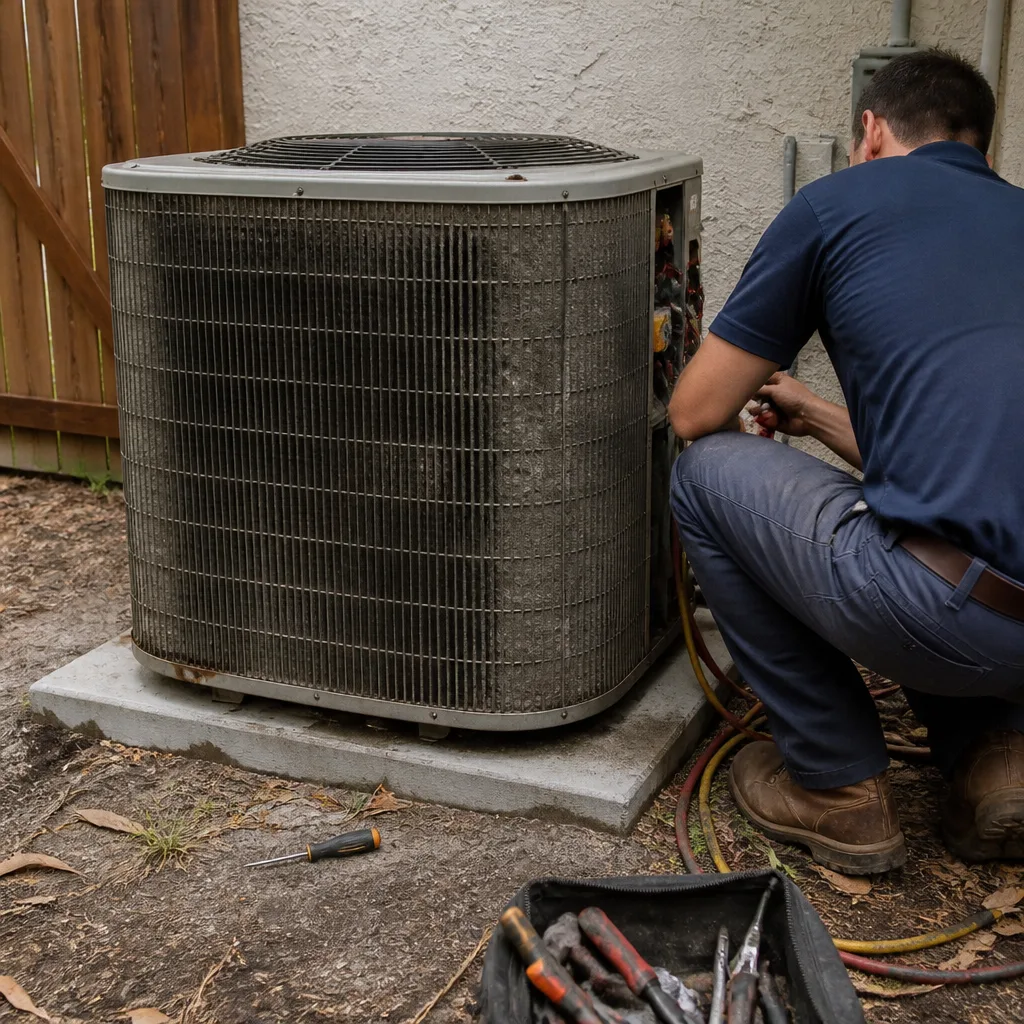 Before
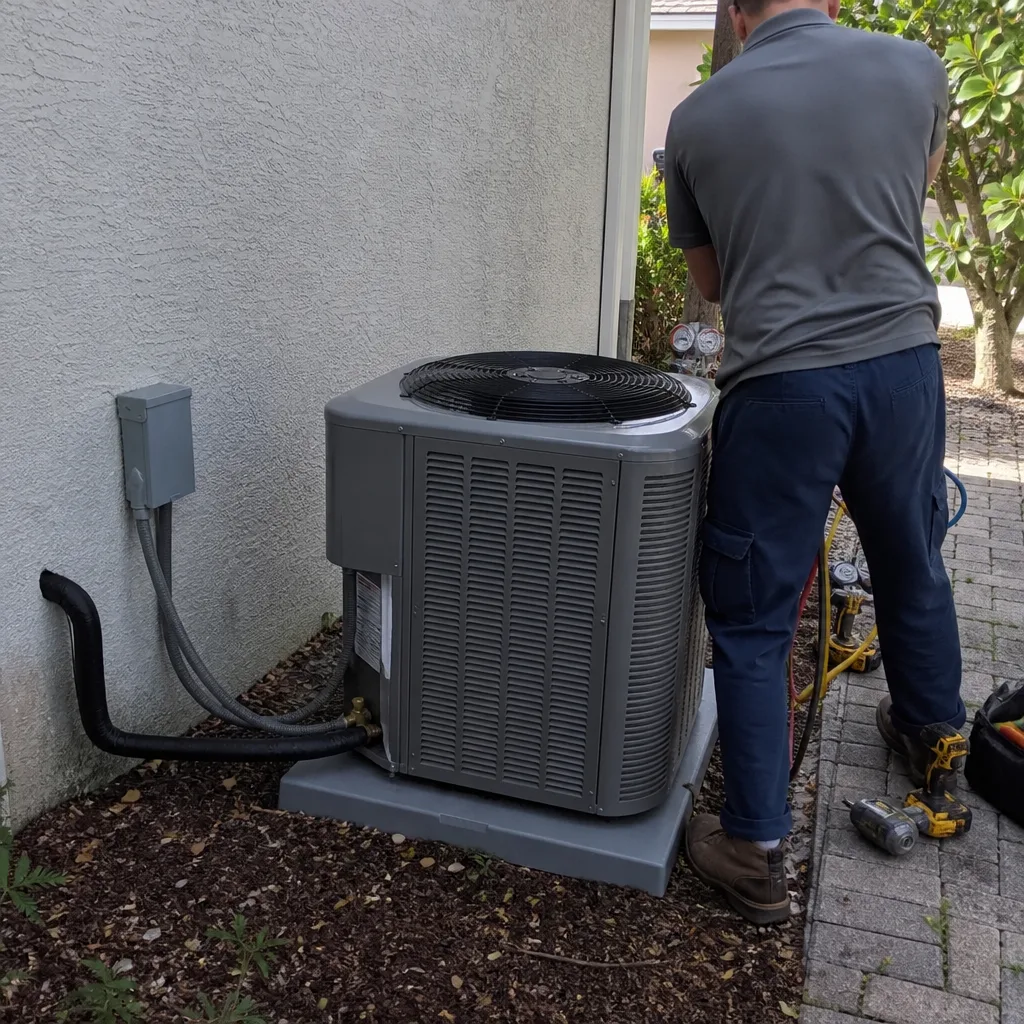 After
After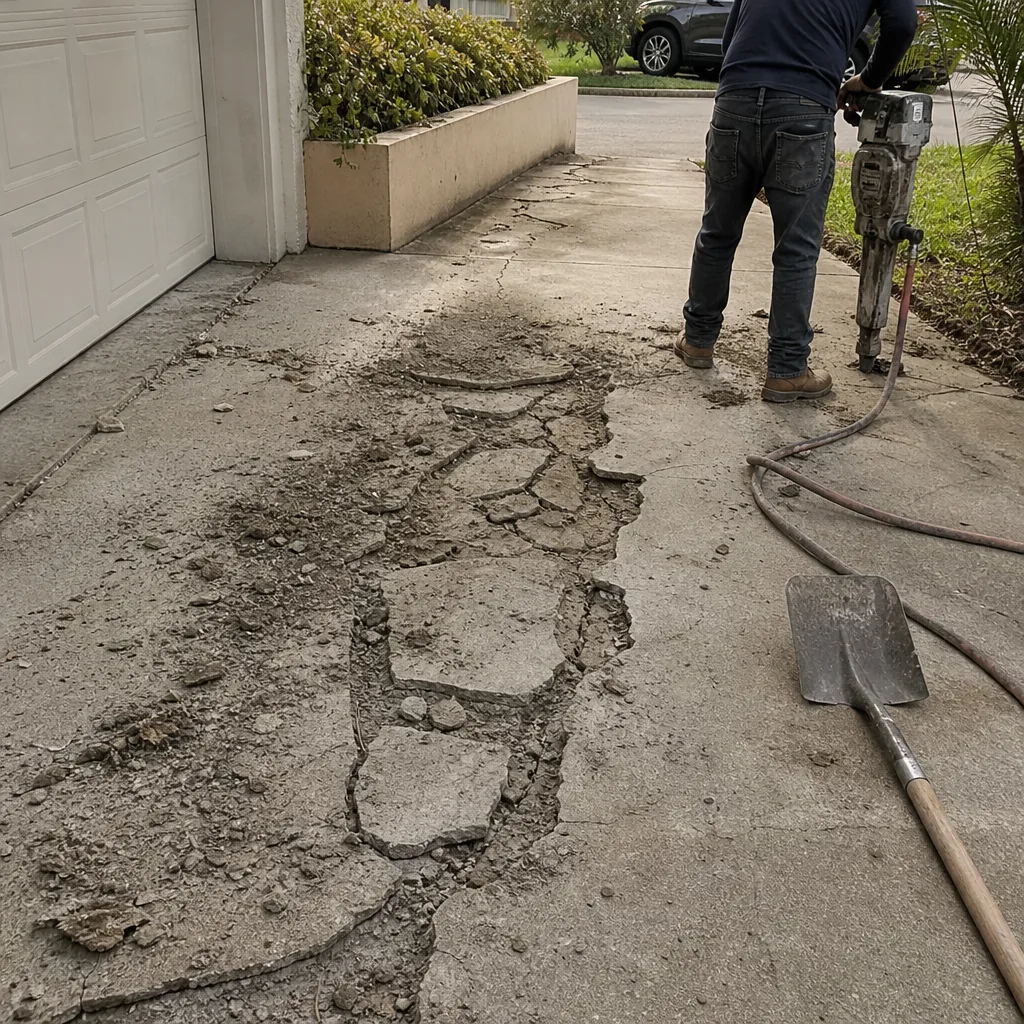 Before
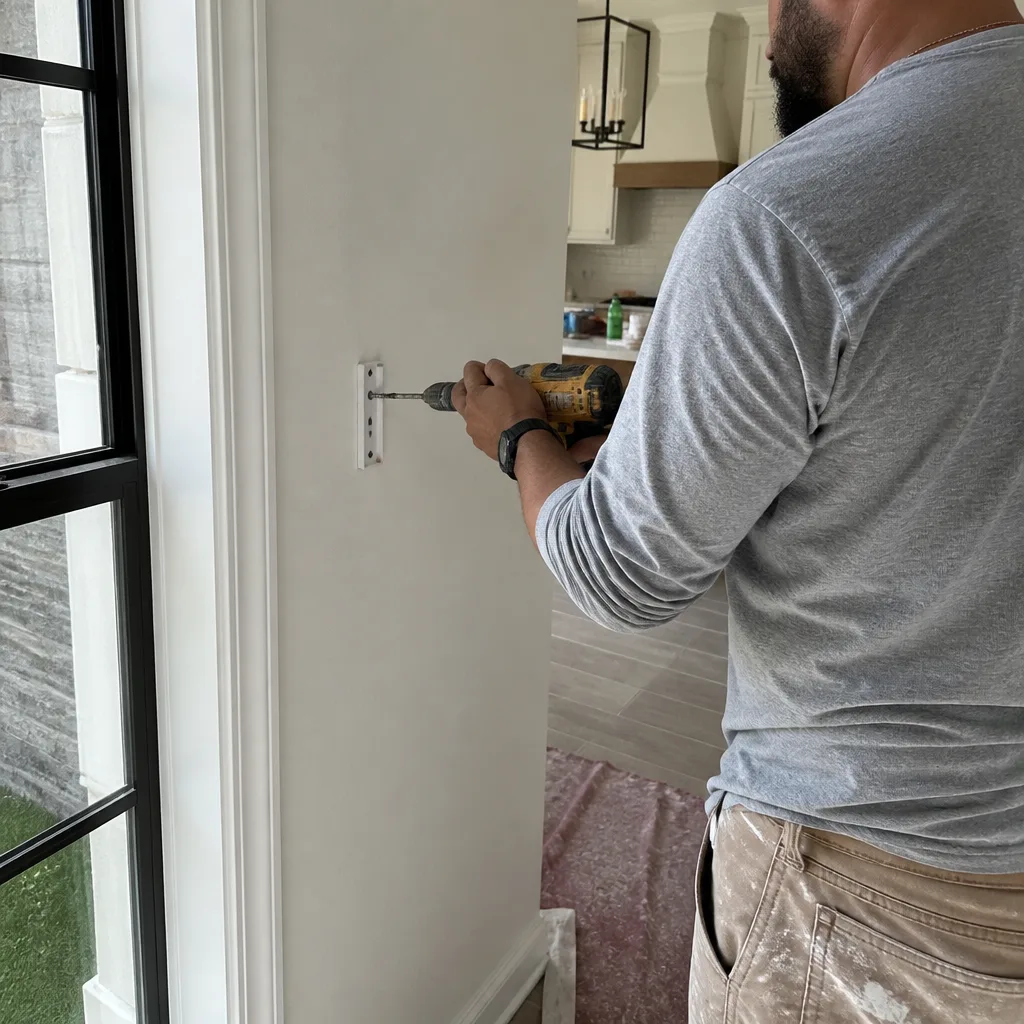 After
After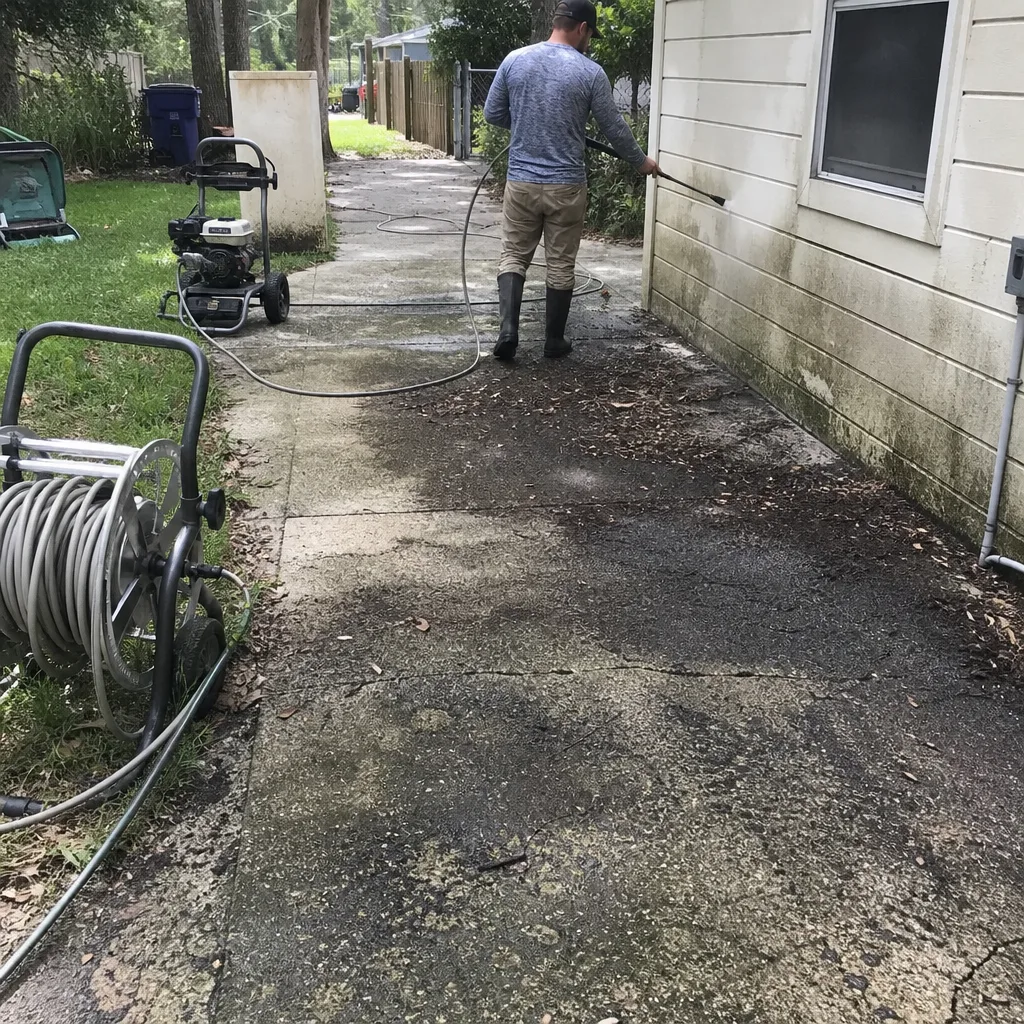 Before
 After
AfterCommon Mistakes to Avoid
- Using a generic four-season checklist. A fall checklist written for Chicago misses Tampa’s critical April window for exterior sealing and forces you to wait until October for the next dry stretch.
- Re-caulking every three years. In Tampa, exterior caulk fails in 18 months on south-facing and west-facing walls. Inspect every 12 months and replace at the first sign of pulling away.
- Ignoring the condensate drain line. The most common cause of ceiling water damage from an HVAC system in Tampa is a clogged condensate line, and it is preventable with a monthly cup of vinegar during the cooling season.
- Doing structural work without a permit. Florida law requires permits for structural, electrical, plumbing, and mechanical work. Unpermitted work voids insurance claims and stalls future home sales.
- Power washing stucco during rainy season. Forcing water behind stucco in June through September creates trapped moisture that breeds mold and cracks the surface from behind when it dries.
- Not getting a written maintenance list after a remodel. Without documentation, manufacturer and workmanship warranties cannot be enforced. A verbal instruction does not protect you when a fixture fails.
- Letting indoor humidity climb above 60 percent. Mold grows at 60 percent relative humidity. In Tampa, an AC set below 78 degrees plus exhaust fans in bathrooms is the difference between a healthy home and a mold complaint.
Frequently Asked Questions
Clean gutters twice per year in Tampa: once in April before the rainy season starts and once in October after the first heavy leaf drop. If you have large oak trees or live in a neighborhood with heavy pine canopy like Seminole Heights or Carrollwood, you may need a third cleaning in August after summer storms pack leaves and debris. Call (850) 779-4017 if you want a professional to handle the ladder work.
Yes, replacing a water heater is plumbing work that requires a permit in the City of Tampa and unincorporated Hillsborough County. A licensed plumber pulls the permit, performs the work, and schedules the required inspection. A homeowner who replaces a water heater without a permit assumes full liability for any damage and may be denied insurance coverage for the repair.
The most common mistake is waiting too long to refresh exterior caulk. In Tampa, UV breaks down exterior sealant in 18 months, and a failed caulk joint around a window is the leading cause of water intrusion into the wall cavity. Inspect every exterior seam every 12 months and replace failing caulk immediately, not on a three-year schedule. A quick call to (850) 779-4017 can get you a professional assessment.
An asphalt shingle roof in Tampa lasts 15 to 20 years on average, compared to 20 to 25 years in cooler, drier climates. High UV, salt air, and hurricane-force wind events all shorten roof life. Tile and metal roofs last longer, often 40 to 50 years with proper maintenance, but they still need annual inspections for cracked tiles and corroded fasteners.
A Tampa homeowner can replace light fixtures, switches, and outlets themselves if the work is done to code and is limited to fixture replacement. However, any work involving the electrical panel, new circuits, or rewiring requires a licensed electrical contractor and a permit. Insurance claims for damage caused by unpermitted electrical work are routinely denied.
After a storm, walk the exterior and look for lifted shingles, damaged flashing, and water stains inside around windows and ceilings. Document everything with photos for insurance. For roof damage, call a licensed roofer for a thorough inspection before rain returns. Even a small lifting of a shingle in a tropical storm becomes an active leak during the next downpour. For immediate concerns, call (850) 779-4017 and a live person will answer, day or night.
The Bottom Line

A Tampa home needs a maintenance calendar built for Tampa’s climate, not one borrowed from a northern city. The critical windows are April and May for pre-rainy-season sealing and storm prep, and October for post-storm inspection and repair. Monthly HVAC filter changes during the warm months, an annual roof inspection, and a 12-month exterior caulk check are the three tasks that prevent the most expensive repair bills. Know which tasks legally require a licensed contractor in Florida, and do not let a plumbing or electrical repair slip into unpermitted work. Get a written maintenance list from your contractor after any remodel, register the manufacturer warranties from Kohler, Moen, Silestone, and Caesarstone within 30 days, and you will protect both your investment and your warranty.
Written by Graham Stein, Owner at Elmstead Remodeling Tampa, serving Tampa since 2005.